

Portable Antiquities Scheme is run by the British Museum and Amgueddfa Cymru – Museum Wales to encourage the recording of archaeological objects found by members of the public in England and Wales. Every year many thousands of archaeological objects are discovered, many of these by metal detectorists, but also by people whilst out walking, gardening etc. Finds recorded with the Scheme help advance knowledge of the history and archaeology of England and Wales.
If you haven’t yet tried it, the new PAS database (https://finds.org.uk) is now up and running. New features coming soon include ‘Finder Submissions’ which enables finders to upload details of their finds with photos. These are flagged up with the relevant Finds Liaison Officer. If the find is of interest, the FLO can contact the finder to bring it in for further research. The Treasure aspect of the database (also coming soon) will enable finders to see which stage of the Treasure process their find has reached. There are ever-increasing numbers of Treasure finds being reported to us from Wiltshire and neighbouring counties, due to more people detecting and upgrades to their machines.
Several Treasure finds which have now been through the Treasure process and are being acquired by local museums include a Late Bronze Age gold bracelet hoard from near Malmesbury, dating to 1150-800 BC which has recently been acquired by Athelstan Museum, Malmesbury: WILT-DE7029, Bronze Age gold hoard from Wiltshire | Portable Antiquities Scheme.
Wiltshire Museum, Devizes hopes to acquire a Bronze Age goldworker’s hoard from Urchfont, dating to 1650-900 BC, including a rare anvil and hammer, both showing traces of goldworking: WILT-C97E23, Bronze Age copper alloy hoard from Wiltshire | Portable Antiquities Scheme. The hoard was found in situ. Fortunately, the finder did not dig it up himself and instead contacted me at The Salisbury Museum. My team worked with the County Archaeology team and the finder to block-lift the hoard, thus ensuring more information could be gleaned. It was taken for micro-excavation at the British Museum. In 2025 we helped excavate three in-situ Roman coin hoards in vessels near Urchfont, plus two further in situ Roman coin hoards in vessels from other areas in Wiltshire. As potential Treasure finds, all are currently with Conservation at The British Museum.
Finds from a site in West Wiltshire, found in ploughsoil during a commercial metal detecting rally in January 2025 are currently going through the Treasure process. These include an Early Medieval gold and garnet ring (Fig. 1), plus an Early Medieval gold, silver, ivory and garnet eagle’s head (Fig. 2) dating to early 7th century. Geophysical survey was subsequently carried out by Archaeological Surveys Ltd. resulting in a hitherto unknown Roman villa being discovered. Further detecting, plus test pitting produced more finds: WILT-113D1C, Early Medieval gold and gem hoard from Wiltshire | Portable Antiquities Scheme. Cardiff University and PAS Wiltshire excavated the Early Medieval area of the site earlier this year.
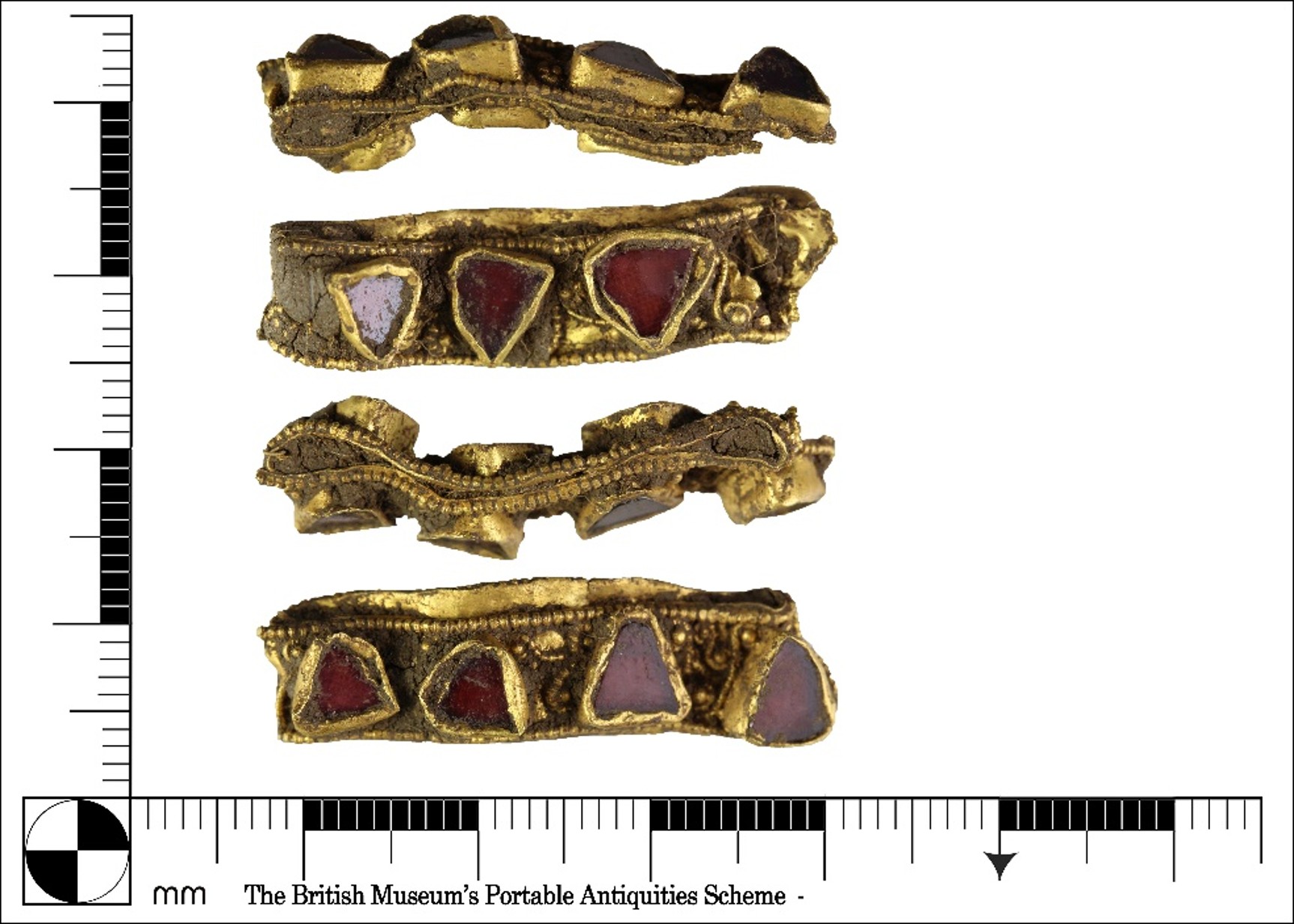
Fig. 1 Early Medieval gold and garnet finger ring (as found, not cleaned) (Image courtesy of PAS)
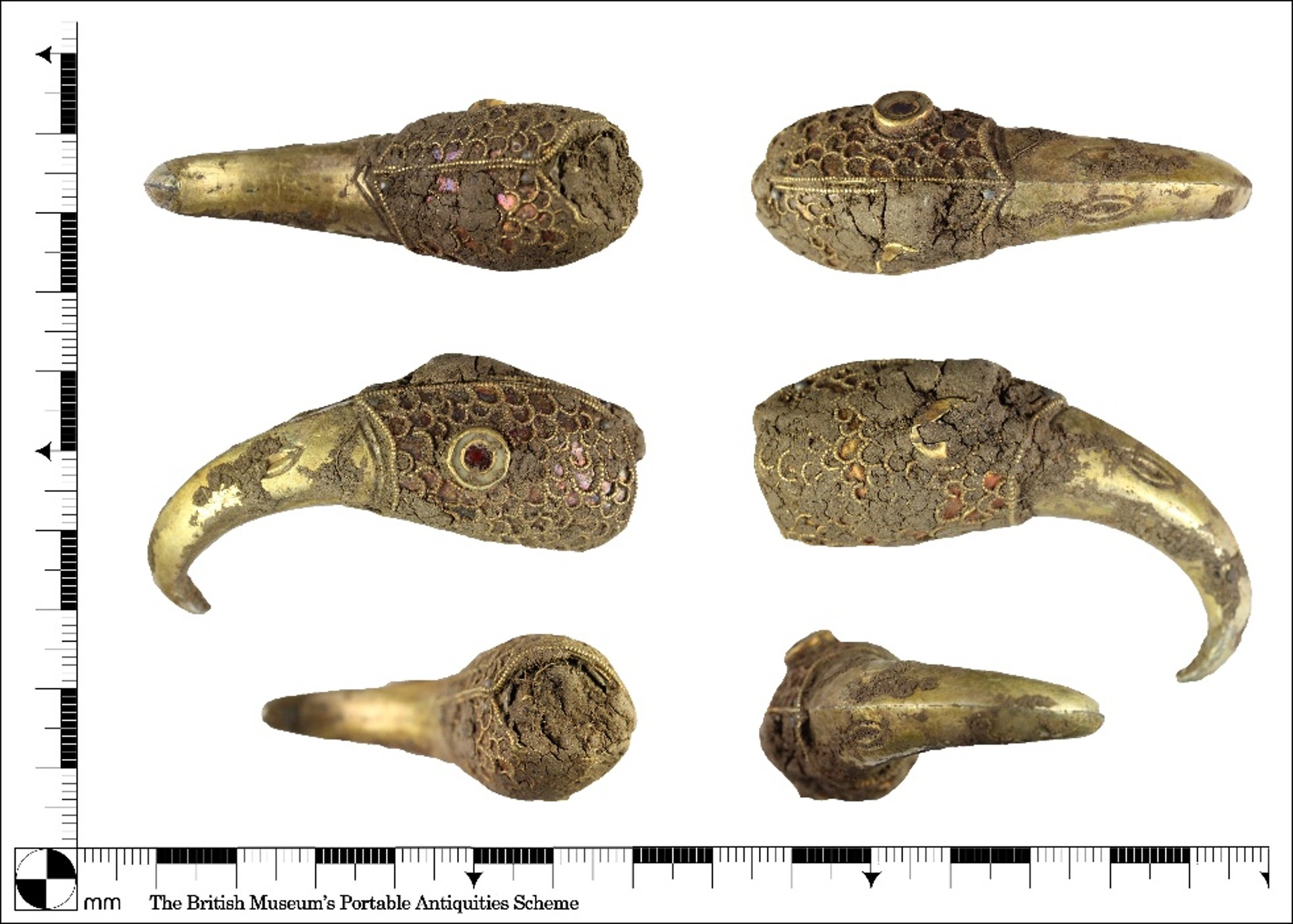
Fig. 2 Early Medieval gold, silver, ivory and garnet eagle’s head (as found, not cleaned). (Image courtesy of PAS)
If you have discovered an archaeological find in Wiltshire you wish to have identified, contact PAS@salisburymuseum.org.uk. n.b. it is a legal requirement to report Treasure finds to the coroner within 14 days of finding. This can be done via PAS. For further information see finds.org.uk/documents/file/pa-and-t-leaflet.pdf
Sophie Hawke
Finds Liaison Officer for Wiltshire
Portable Antiquities Scheme
Share this post
About Us
Research Tools
What We Do
Contact us
Wiltshire and Swindon History Centre
Cocklebury Road
Chippenham
SN15 3QN
E: heritageadmin@wiltshire.gov.uk
T: 01249 705500


