

We’re excited to share some fantastic news from the Conservation and Museums Advisory Service (CMAS)! Museum Development South West has secured money from National Lottery Heritage Fund for an important new initiative:
Reducing the Risks: Hazards in Collections
This project is all about helping museums across the South West identify and manage hazardous materials that may be lurking in their collections. With this funding, museums will gain access to expert advice, specialist equipment, and training opportunities—empowering both paid staff and volunteers to handle these risks with greater confidence and care.
As a proud partner in this initiative, CMAS will be expanding the support we offer to museums dealing with potentially dangerous items. These can include everything from asbestos in wartime gas masks, to arsenic in taxidermy specimens, and even radioactive materials found in old instruments and minerals.
Real-World Examples from the Lab
One of the key services CMAS provides is analytical testing for hazardous substances such as arsenic and mercury. Recently, two intriguing objects arrived in our lab for testing: a child’s silk dress and a beaver top hat, both from a museum collection.
The Green Dress and the Arsenic Scare:
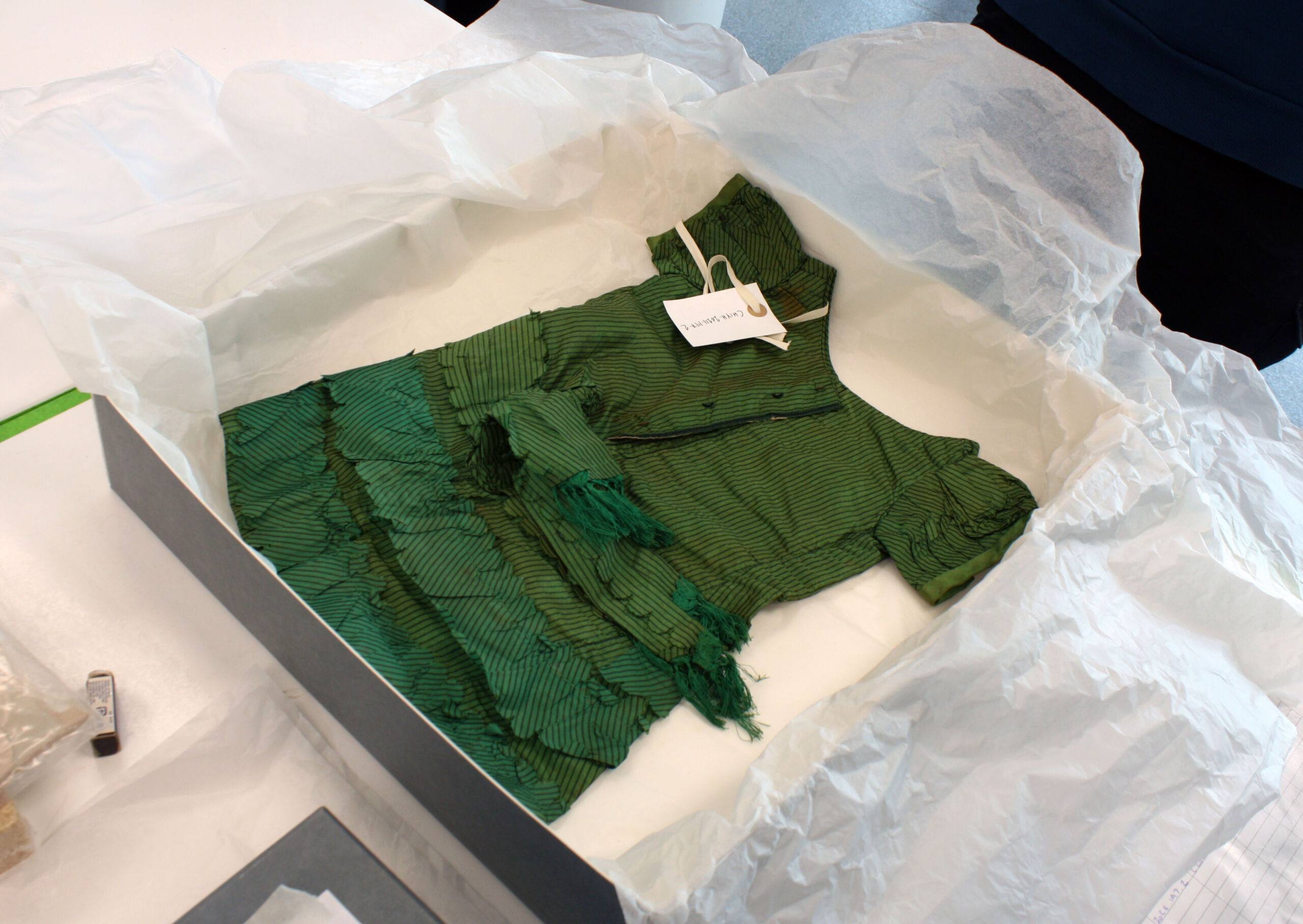
In the 18th and 19th centuries, vibrant green dyes like Scheele’s Green and Paris Green were all the rage—but surprisingly they knowingly contained arsenic. These pigments were used in everything from wallpaper to textiles and even book covers. Prolonged exposure could lead to serious health issues, including cancer and neurological damage.
The green tint of the child’s dress raised immediate concerns. We swabbed the fabric and tested for arsenic compounds. Fortunately, the results were negative. Still, we recommended handling the dress with gloves as a precaution.
The Top Hat and the Mad Hatter’s Legacy:

The second object, a beaver felt top hat, tells a darker story. These hats were once a status symbol, but the process of making them involved mercury—a toxic substance that led to the phrase “mad as a hatter.” Prolonged exposure to mercury could lead milliners to severe neurological and behavioural disorders.
Upon testing the hat for mercury, the results were positive, prompting us to recommend enhanced safety measures. The hat was repackaged with hazard labels, and we advised that it be handled only with gloves and masks and stored in a cool environment to reduce vapour release.
Why This Matters
Many museum objects carry hidden risks due to the materials and methods used in their creation, decomposition and treatment (e.g. pesticides). Through this new project, we’re not only helping museums identify these hazards but also ensuring they have the tools and knowledge to manage them safely.
If you’re curious to learn more about the history of toxic pigments in books, we highly recommend checking out the Poison Book Project.
Stay tuned for more updates as we continue to support museums in preserving their collections—safely and sustainably.
If you have a conservation query, want a quotation to carry out some work, or would like to book a free appointment for one of our conservation surgeries, we would love to hear from you! You can contact the team by email cmas@wiltshire.gov.uk or why not follow us on social media:
Facebook: CMASwilts
Instagram: @heritagecmas
Linkedin: Conservation and Museums Advisory Service
Kayleigh Spring, Conservator
Share this post
About Us
Research Tools
What We Do
Contact us
Wiltshire and Swindon History Centre
Cocklebury Road
Chippenham
SN15 3QN
E: heritageadmin@wiltshire.gov.uk
T: 01249 705500


