

Located on the eastern edge of Wiltshire near Hungerford, the Roman villa complex at Littlecote is such an exciting and interesting place to visit, and certainly one of Wiltshire’s hidden Roman gems.
I was reminded of what a special place Littlecote is recently when Neil Adam (Assistant County Archaeologist) and, I on sunny Sunday after back in September, led a group of 45 people on an archaeological tour around the site. There is so much to see and hear about at Littlecote that our walks and tours here have always been very popular and sold out!
What you will see here at Littlecote is one of the most completely excavated and displayed Roman villas in the country. It is famous for its Orpheus mosaic, but the site is far more than just a Roman villa. This area has a rich and complex history and was continuously occupied for almost 2,000 years from 43 CE to present. It is an interesting Roman site not only because of the archaeology but because of the pioneering excavation and conservation programme that was undertaken here and because the story of the site is not finished yet.
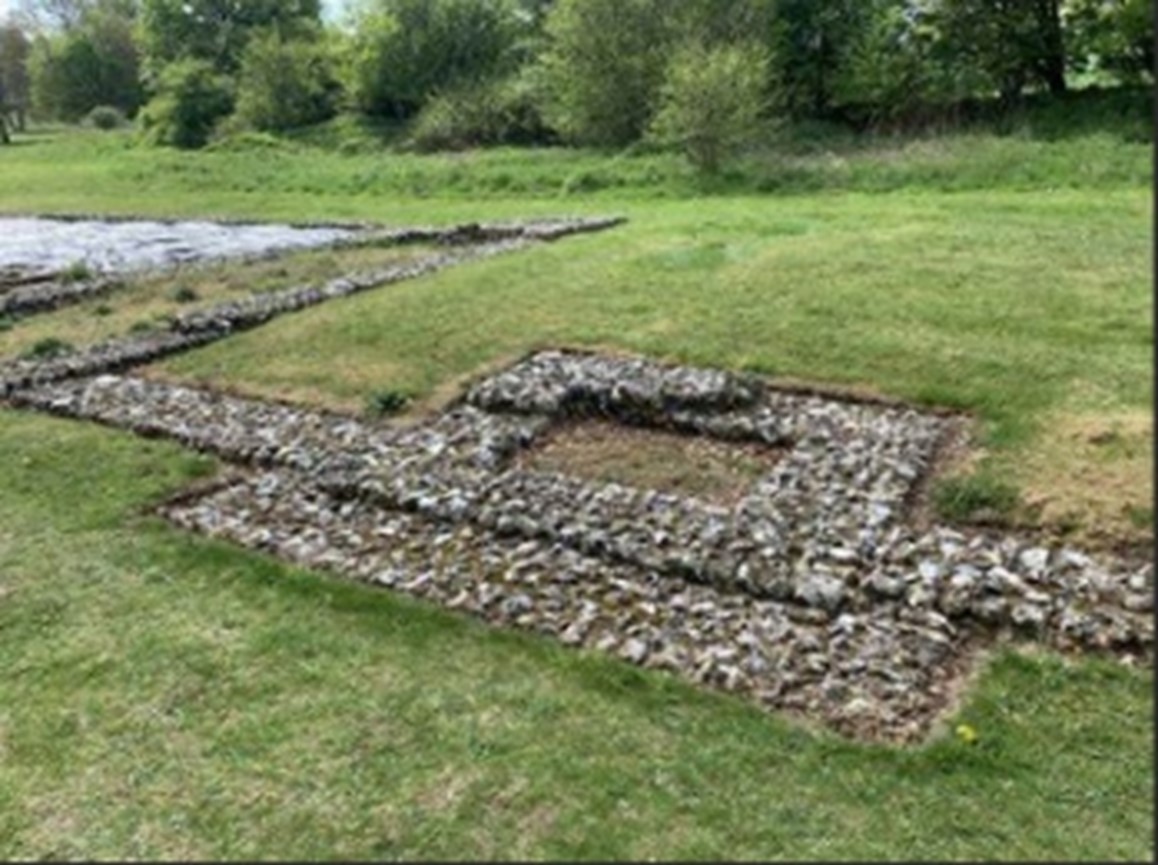
Roman walls, part of the Littlecote Roman villa South Wing
The Roman villa complex is located 400 m west of Littlecote Manor House . Today, and probably in Roman times, it is set is rural isolation in a chalk valley on the banks of the River Kennet. The river is key to why the Romans and later medieval people settled here It was probably a protected river crossing in the early years of the Roman military occupation.
A multi period rural community occupied over 2,000 years. The Roman site served a family or small community for most of its existence from 1st to late 4th century CE. It was the centre of a farm estate, employing lots of people, one of several in the Kennet Valley area. In its final phase in the late 4th century it became a more formal high-status site with the Orpheus mosaic and a possible shrine complex.
The Roman villa was first discovered in 1727 when work was being done in the garden of the then hunting lodge, a Roman mosaic was completely exposed and came to the attention of antiquarians who thankfully made records of it. It then disappeared from knowledge for 250 years The Roman complex and the mosaic were rediscovered by archaeologists in 1976, and this re-discovery is described really well in the 2022 book by the late Bernard Phillips (see below).
The re-discovery of the site was a catalyst for the setting up of a unique excavation and conservation project. The site was unusually almost completely excavated between 1978 and 1991 over a 13-year period. Under the direction Bryn Walters and Bernard Philips, hundreds of staff and volunteers were involved, and over a million visitors witnessed the excavation. This programme was all funded by private means from the subsequent owners of the manor, Seton Wills and Peter de Savory. What was excavated was not only the remains of a villa but a medieval settlement, farm buildings, barns, workshops, corn dryers, and burials. Thousands of artefacts were recovered including, pottery, brooches , and coins.
What you can see on site today is the remains of the courtyard villa complex as it was left following restoration after the excavations. Mostly what we see now is the lowest ground level of the buildings below what was the floor levels as there were in the final phases of Roman occupation, but we know the buildings stood very tall, multi storey , up to several metres high in places. We have to imagine the buildings in 3 dimensions, with brightly painted wall plaster, vaulted ceilings and mosaics. The different wings of the courtyard villa complex were built at different times and evolved over the Roman period, with major phases and redevelopment in CE 70, 170, 270, 300 and 370.

Plan of the Littlecote Villa Complex (after B Phillips 2022)
For most of its development, the villa complex at Littlecote was not unusual and followed the same trajectory of many other excavated Roman villa estates. However, about CE 370 the former agricultural buildings of the villa’s North Wing were transformed to create a building with two room containing a unique mosaic floor. These 2 rooms themselves are unique in Roman Britain, with the western one having 3 apses and would have had a domed roof. This phase seemed to mark the end of the of agricultural activities that had taken place here in the preceding centuries.

Photograph of Orpheus Mosaic after restoration around 1990
The depictions on the mosaic are unique to Britain and show a complex sequence of imagery from Greco Roman art representing birth, death and re-birth, a combination of depictions of Orpheus, Apollo and Bacchus (Dionysus). It became known as the Orpheus Mosaic because of the central figure of Orpheus, probably linking to the Corinthian school of mosaic making which specialized in Orpheus mosaics.
The key question is what was all this for? Unique as this complex is there is still a lot of debate about its function. Was it a temple, a public Bacchic/Orpheus cult for visitors, or a private temple for use of a wealthy family who didn’t need to farm anymore and used it to feast? Either way, there must have been a reason why lots of wealth had been sunk into this building towards the end of the Roman occupation.
The mosaic had suffered badly from tree root damage and from exposure in the 18th century . In the 1978-88 excavation only 50% of it had survived all that was left was taken up and set back in lime mortar and the rest was reconstructed using the original engraving made in 1727. At the end of the excavation and restoration project, timber building put up to protect the mosaic.
The occupation of Littlecote didn’t stop at the end of the Roman period. An extensive medieval settlement developed on top of and in between the villa and what is now Littlecote House. Earthwork remains of this settlement have been preserved in the park over a distance of about 500 metres.
Subsequently, the first phase of the manor house dates from the 13th Century. In the mid-1530s Henry VIII stayed and is said to have courted his third wife Jane Seymour here. Sir John Popham acquired the house and built the present Elizabethan mansion that was completed in 1592. The house has a complex and interesting history including its use in World War 2 by both the British and American Army. It remained a private home until it was sold to Warner Hotels in 1996
Littlecote is a great place to visit and explore the range of archaeological and historic features. With permission of the hotel (Warner) visitors can walk around the villa complex located 400 metres west of the main hotel and read the interpretation panels recently erected by the Friends of Littlecote Group. You can also read information about the excavation, including original photographs which are on display on the ground floor of the old wing of the hotel.
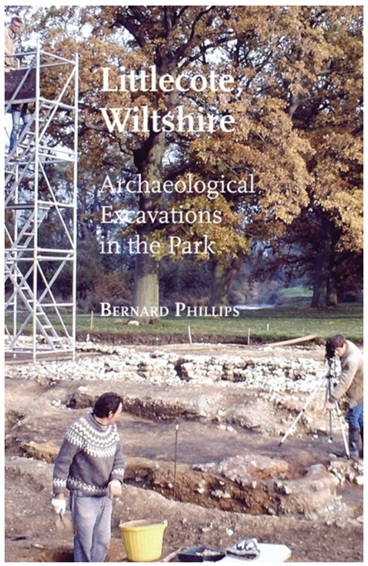
For an excellent read about the excavations and discoveries at Littlecote, see the 2022 Hobnob Press publication by the late Bernard Phillips: Littlecote, Wiltshire. Archaeological Excavations in the Park.
Littlecote is one of a number of places that the Wiltshire Archaeology Service leads archaeological walks and tours of every year. If you are interest in joining us for walks in 2025 (dates and places still to be confirmed) please contact us Archaeology@wiltshire.gov.uk and keep an eye on the History Centre event web pages.
Melanie Pomeroy-Kellinger, Team Manager Archaeology, Landscape and Design (AKA County Archaeologist)
Share this post
About Us
Research Tools
What We Do
Contact us
Wiltshire and Swindon History Centre
Cocklebury Road
Chippenham
SN15 3QN
E: heritageadmin@wiltshire.gov.uk
T: 01249 705500


