

Each May and August we mark VE Day and VJ Day – Victory in Europe and Victory over Japan – and the end of the Second World War.
It is 80 years since those momentous events and, as always, the veterans of the global conflict are front and centre of this week’s commemorations. While their numbers are dwindling their stories continue to be shared and preserved.
Some of those stories are held at the Wiltshire & Swindon History Centre in the form of personal letters and diaries as well as newspaper reports, official records and photographs.
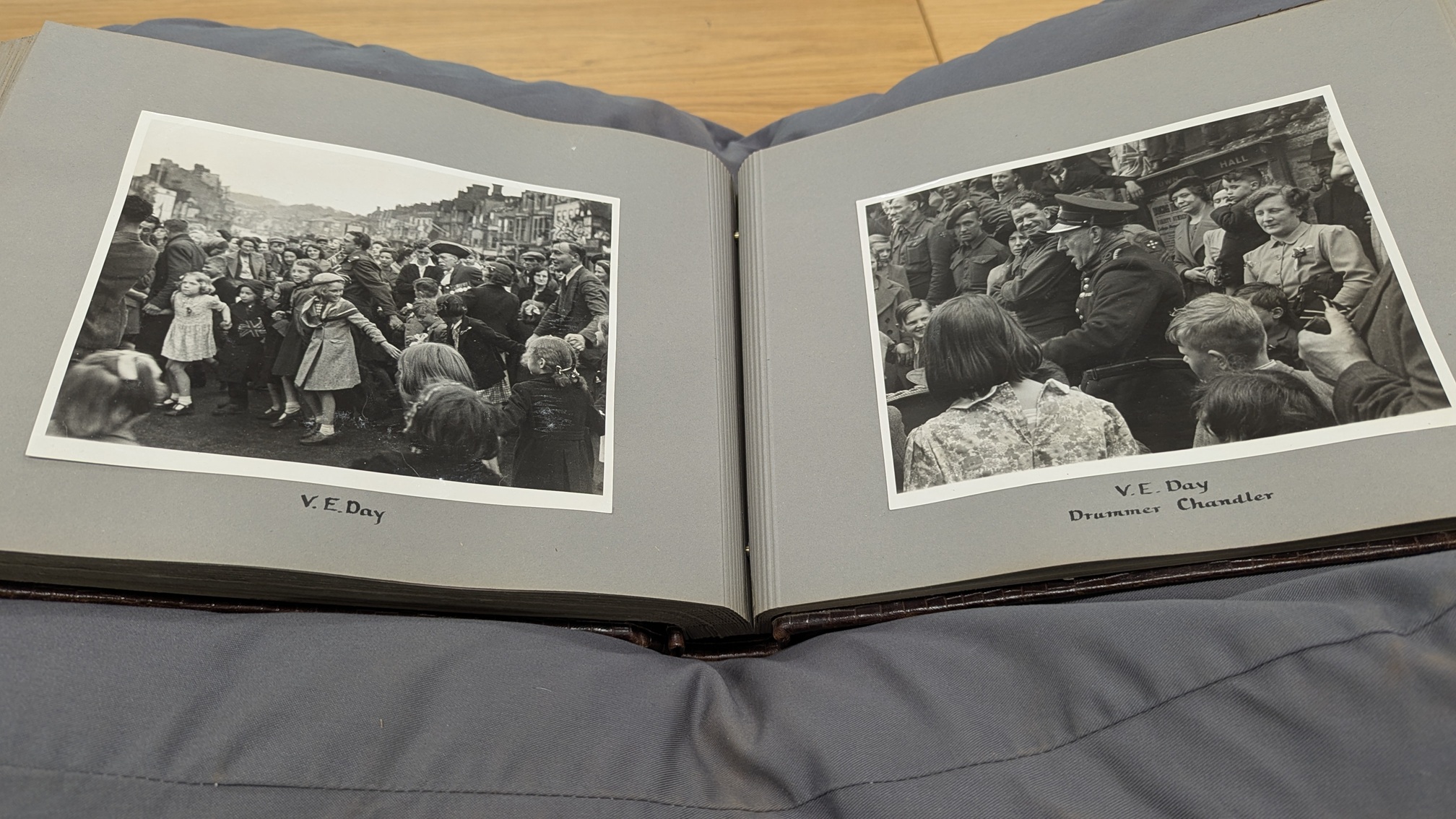
Peace in Europe had been eagerly anticipated for weeks, if not months. The D-Day landings of June 1944 had been a success and allied armies from west and east converged on an increasingly beleaguered Germany. By March 1945 the German Luftwaffe (air force) had flown its last bombing raids over London and the last of the V2-rockets had been fired.
In April Allied and Soviet (Russian) forces finally met as they converged on towns along the River Elbe.
On the Home Front people tuned into the wireless for regular updates. Wilton author and diarist Edith Olivier recorded both the momentous march towards peace and the detail of daily life.
On 27th April Edith attended a meeting in Salisbury to discuss the handing over of the Bishop’s Palace in the Cathedral Close to the chorister school and to making a Bishop’s House of Mompesson (now a National Trust property). She then writes: “Americans & Russians have met in Germany & Mussolini is captured by the Italian Patriots. Also Petain [Marshal Petain, leader of German supporting Vichy France] is a prisoner in France.”
The following day Edith records the rumours of unconditional surrender and on 29th April: “It is true that Himmler offered unconditional surrender to us and the USA but we refused … to leave Russia out.” She adds: “Mussolini shot by Italian patriots … & Hitler said to be dying of a cerebral haemorrhage.”
Tuesday 1st May proves a momentous day. “The end of the war seems so near. … The Red Flag flew over the Reichstag buildings yesterday… & at midnight when I tuned in came the thunderous news that Hitler is dead.” Edith adds: “I went to a [Wilton] council meeting where we discussed our programme for V.E.D (Victory in Europe Day).” Discussions included which buildings to de-requisition including the Town Hall, Michael Herbert Hall and the Fugglestone Housing site.
Her entry for 2nd May captures the exhausting pace of the news: “It’s almost impossible to write down the order in which things happen. … At 9 came the wonderful news that the whole of the German [forces] in Italy surrendered… Then came the news that Berlin had fallen to the Russians. What is left of the War?”
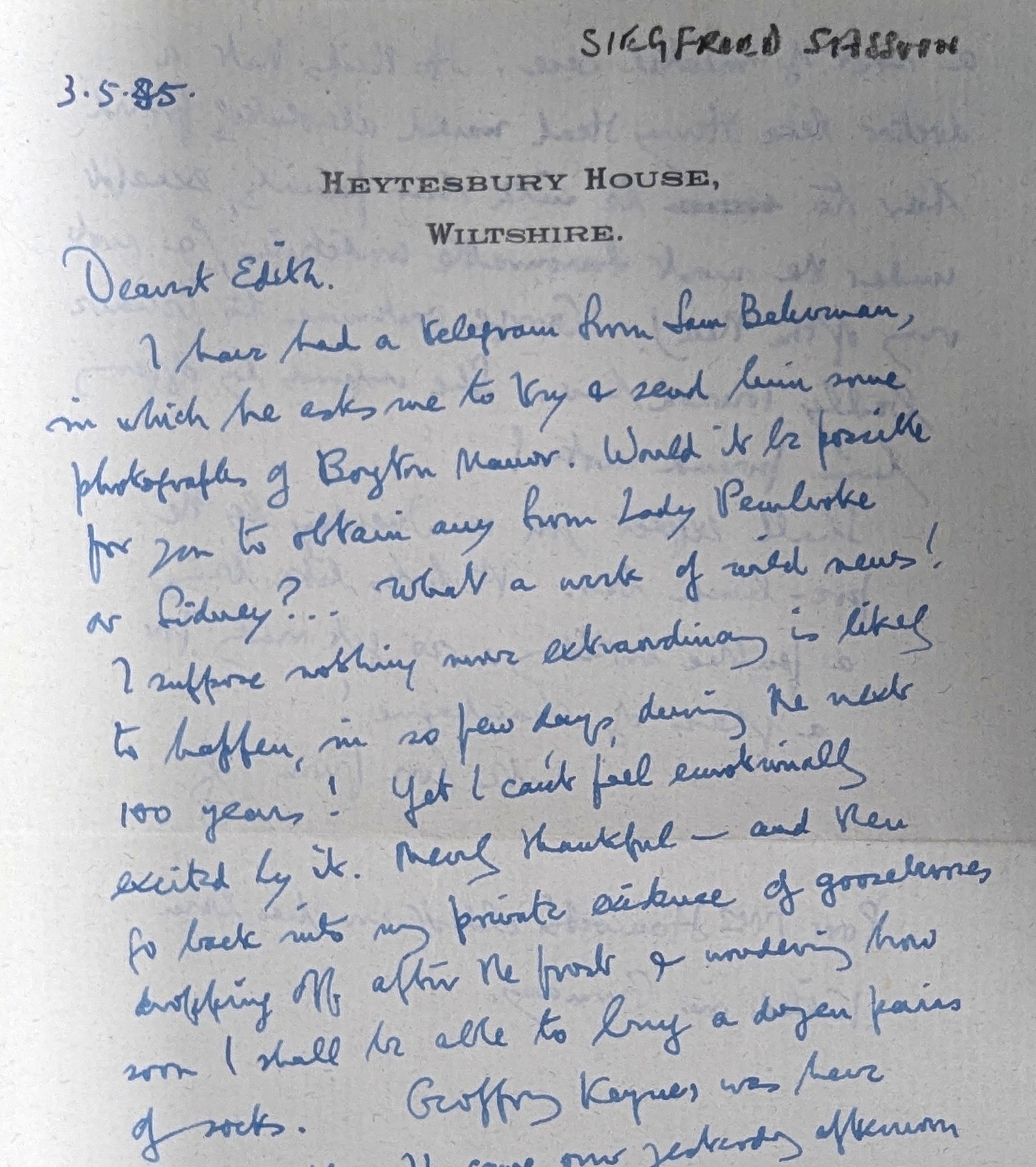
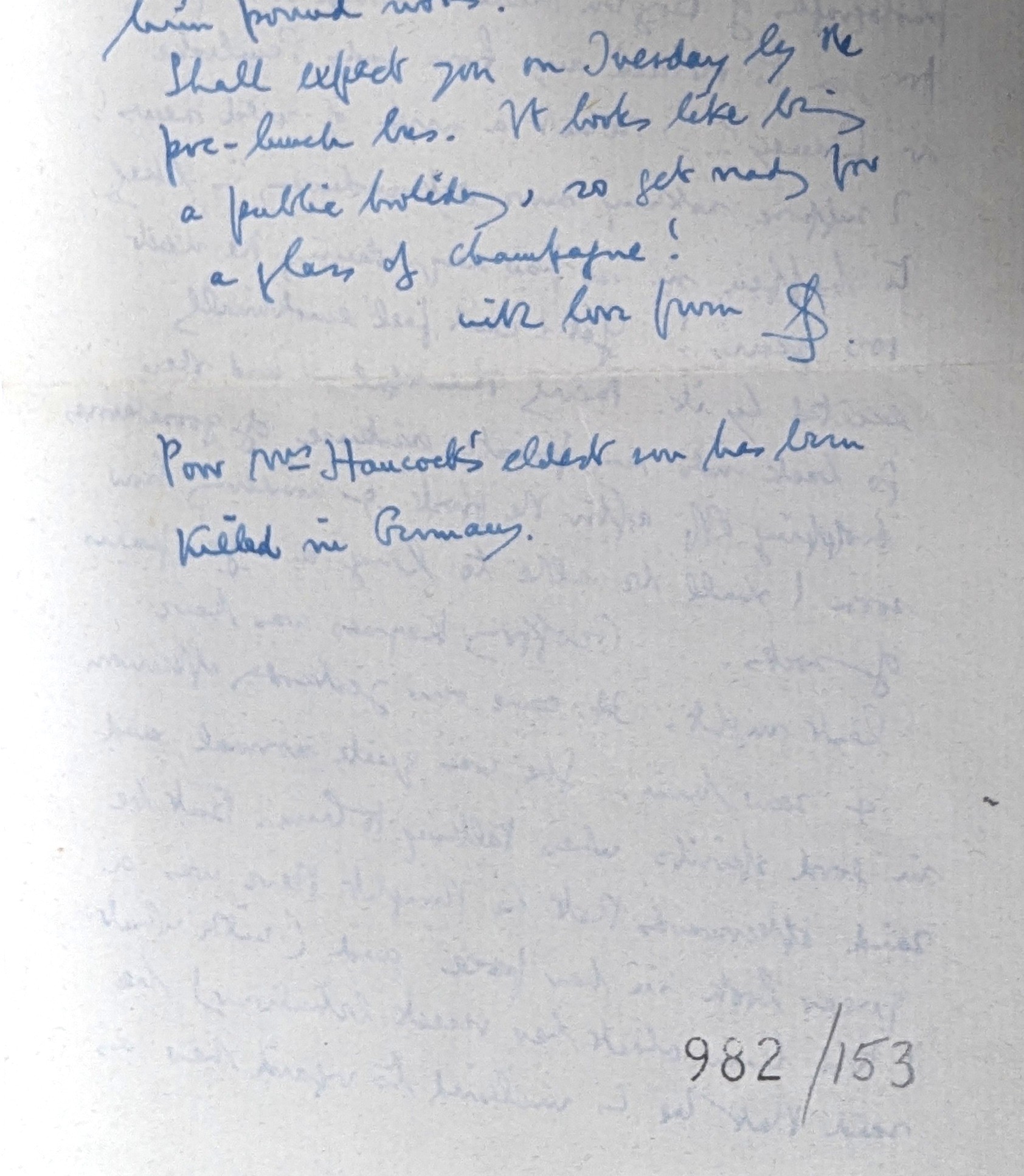
Poet Siegfried Sassoon, a close friend of Edith, expresses some of the conflicting emotions that many people must have been feeling. On 3rd May her writes to her from his home at Heytesbury House in Wiltshire: “What a week of wild news. I suppose nothing more extraordinary is likely to happen in so few days during the next 100 years! Yet I can’t feel emotionally excited by it. Merely thankful – and then go back into my private existence…”
Away from the Home Front, Brigadier Jack Parham of the Royal Artillery and British 2nd Army, is also recording the road to peace in Europe. For him the fighting ended on 5th May following the surrender of local German commanders.
Jack wrote in his pocket diary for 4th May: “At 1820 … terms had been signed by which the war with Germany ends, so far as we are concerned, at 0800 tomorrow – so it was truly a memorable evening. What an immensity of things we have to be thankful for it makes one feel very humble but immensely happy.” He notes on 5th May: “Fighting stopped 0800hrs. Wrote to Dad.”
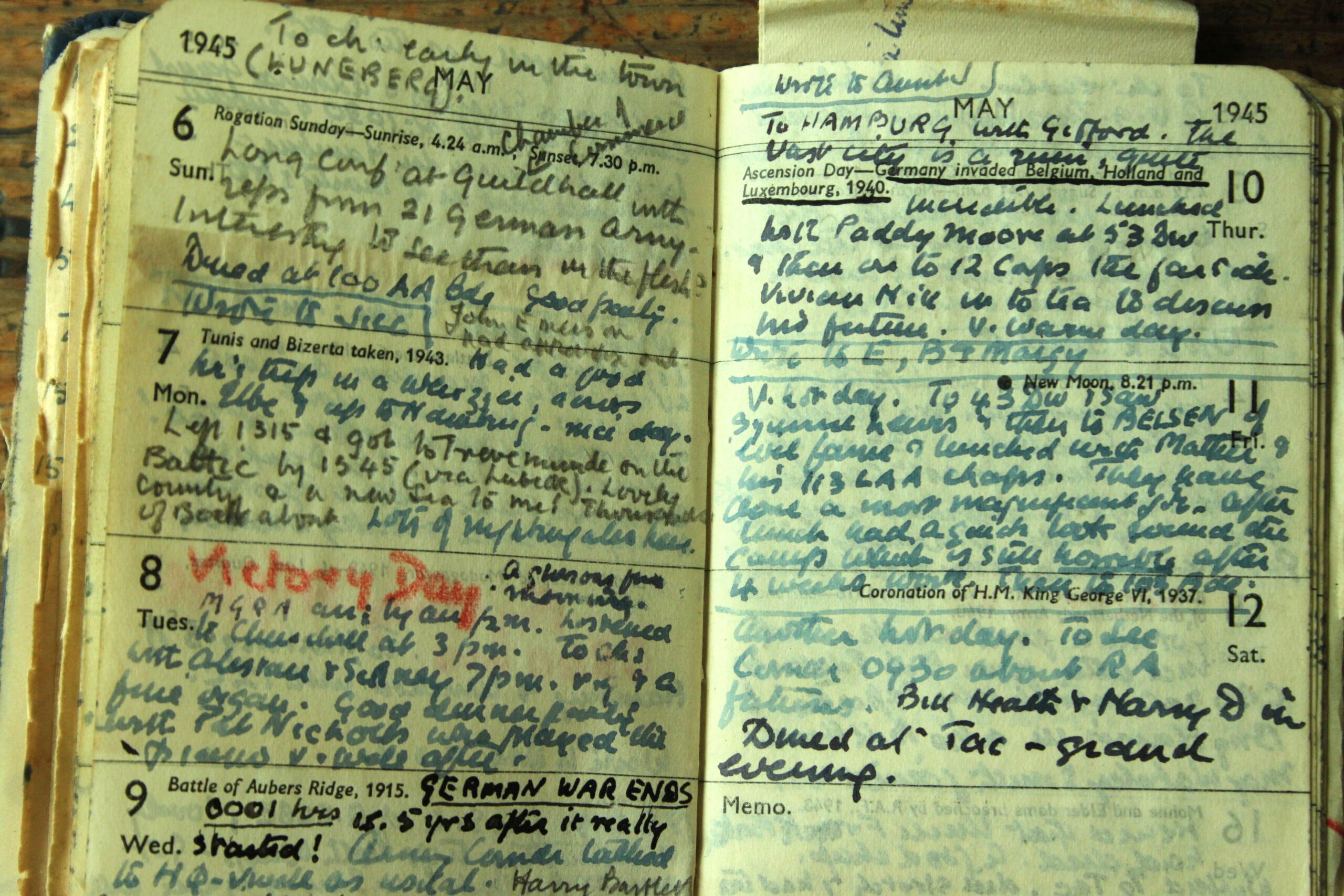

For Jack, his work was not done and on VE Day he was travelling to Travemunde on the Baltic coast. “Victory Day. A glorious fine morning. Listened to Churchill at 3pm.To ch[urch] … v.g. & a fine organ. Good dinner … with Pat Nicholls who played the piano v. well after.”
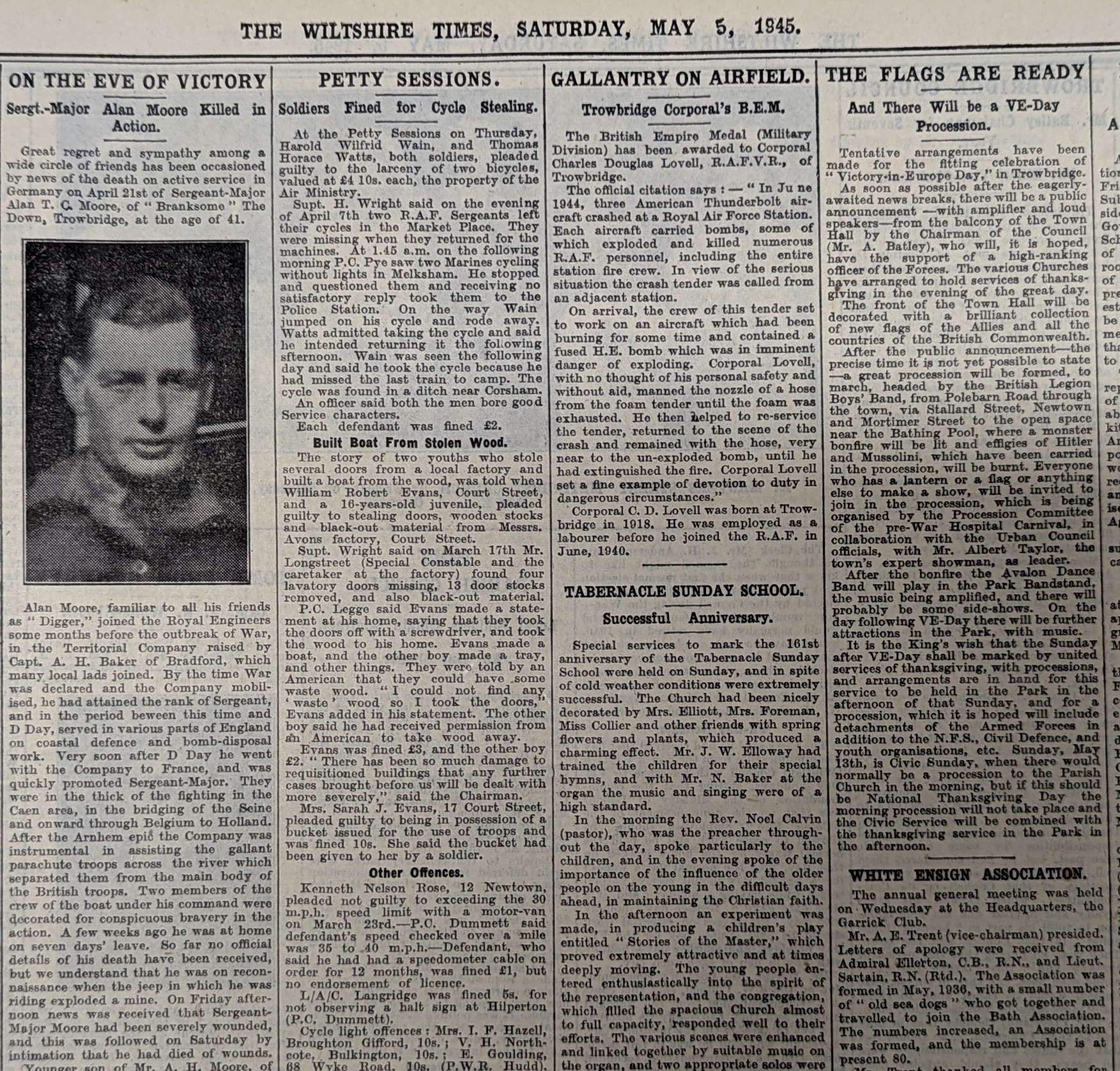
At home, newspapers begin reporting plans for “Victory in Europe Day” but alongside the news of flags, processions and celebrations, there are families still receiving the worst possible news – the death of a loved-one killed in action. The Wiltshire Times on 5th May reports on the death of Sergeant Major Alan Moore from Trowbridge.
By 7th May, the country is awaiting confirmation that Germany has surrendered. Edith writes: “All day everyone hangs on the wireless for the final news of victory. At Last – a 6 – we hear that the Prime Minister will formally announce it at 3 tomorrow. & the King will broadcast at 9. … At 7 to a council committee when we agreed that they mayor shall announce peace from Town Hall ¾ of an hour after it’s announced on wireless. We then go to church with all the towns people. … The King’s speech will be broadcast in Market Place at 9 & then comes bonfire. But no torches. Can’t get them.”
Victory in Europe Day on 8th May 1945 was the first of two days of official celebrations, commemorations and services of thanksgiving. We are all used to seeing photos of people dancing in the streets and of children at street parties. But people experienced mixed emotions – grief, war weariness and uncertainty about the future.
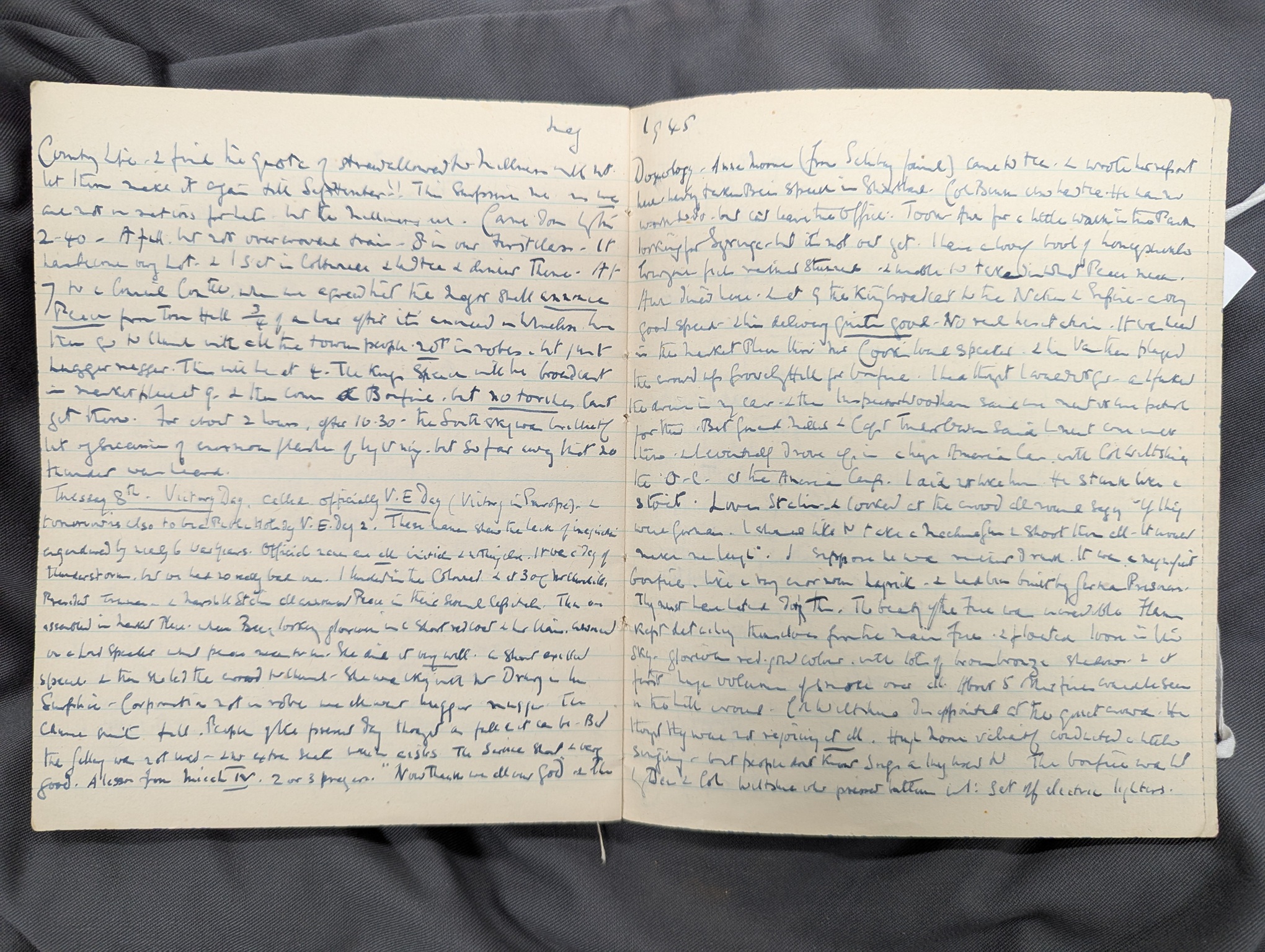
Edith’s diary entry for the day is mildly complaining of the official name – V.E Day – saying that “official names are all initials and nothing else” and reflective of the lack of imagination engendered by almost six years of war. She also reports on a friend’s surprise at the quietness of those at the bonfire on Grovely Hill.
Photos of the crowds in Marlborough High Street and Salisbury’s Guildhall Square show more of the celebratory mood of the day. In Salisbury there is an impromptu gathering in the city centre with people dancing in front of the Guildhall. In Marlborough people of all ages crowd into the High Street, including the town crier amidst a gaggle of children and parents dancing.
Chippenham eye doctor Joan Hickson, wife of a local GP, also writes of the subdued nature of the day – that while she feels quiet thankfulness she has little trust in what the future holds. However, on the 9th she reports: “Went up the town last night to see what people doing. Crowds everywhere, dancing and singing in the market place. There was very little drunkenness and no hooliganism… On the whole people showing their good sense.” Referring to the end of the blackout, she notes: “Few children have ever seen lights at night.”
Ruth Butler, Heritage Education and Digital Engagement Officer
Share this post
About Us
Research Tools
What We Do
Contact us
Wiltshire and Swindon History Centre
Cocklebury Road
Chippenham
SN15 3QN
E: heritageadmin@wiltshire.gov.uk
T: 01249 705500


