

Delving into the Godolphin School Archive
I recently finished cataloguing the archive of the Godolphin School, a girls’ only boarding and day school in Salisbury. I took the project on with glee, because I have been very interested in school archives for years and it was wonderful to get the chance to work on the archive. The archive came to the History Centre at two different times. The first accession of material was listed many years ago, but the much more recent second accession had not, although much of it had been indexed. It was my job to take the first accession, 2954, and the second accession, 4265, and amalgamate them into one new collection, 4312.

My first job was to do my own rough box lists of all the material from the different accessions so that I properly understood the material that we had from the school. This also allowed me to check that the 2954 listing was correct and there were no mistakes. Sometimes I think it’s lovely to have a blank canvas with archive collections and it’s great to have no work done on an archive before, so that you come to it with a fresh mind, but for Godolphin it was certainly useful for me to use the previous listings, although I tried to do my own description of the documents before referring to the lists.
Once I had got an idea of what we held, it was time to try and virtually amalgamate the two accessions. I drew up my proposed structure and put each document or bundle of documents from the two accessions into an Excel spreadsheet, which over time probably found itself multicoloured in every shade Excel allowed me to use. Once I had finished, thankfully every number and description was either a satisfying shade of green, to show they’d been put on the system and numbered, or an equally satisfying red to show they were being returned to the school. These returns were all duplicate items. It was then time to put the structure onto our database and begin the more detailed descriptions, which was a lot of fun as I began to know and understand the school history, location, structure and quirks. I loved the school before I even began the project, but I love it more afterwards.
Records for the school date back to 1709, in a letter from Sidney Godolphin, who died in 1712. The school itself was founded by the will of Elizabeth Godolphin, who had married Sidney’s brother Charles. Between them the couple founded many charities, including the school “for the better education and maintenance of eight young gentlewomen to be brought up at Sarum or some other town in the County of Wilts under the care and direction of some wise and prudent Governess or Schoolmistress”. Elizabeth made her will in 1726, but the school did not open until 1784 in the Cathedral Close. Now, the school’s site is in Milford Hill and teaches well over 400 children. The copy made of Elizabeth’s will is the second oldest document in the archive – although the copy itself is much more modern than the will. The most recent documents are from 2014, so the archive really does span the whole history of the school. The most common ones are from the turn of the 20th century: the school itself still holds most of the more modern records.

The most extensive part of the collection (in terms of number of records) is the five boxes we have of photographs, and it was these that I started cataloguing first. The hope was that having the visual impression of the school would help when I was cataloguing other material, and I think it worked. The part I loved most was looking at the turn of the century photographs, which include whole school photographs, staff, house and form photographs, and lovely images of sports. The earliest photograph in the Godolphin collection is one of Miss Polhill, who was headmistress from 1854-1857.
Dancing Back to 1914 and A Child’s War
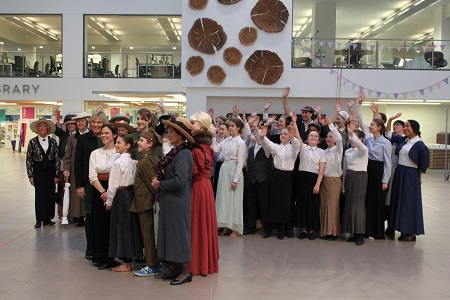
This month we celebrated the end of a wonderful project that involved young people from across the county combining heritage and dance to learn about and commemorate the First World War.
The History Centre was proud to have been part of the Dancing Back to 1914 project which was funded by the Heritage Lottery Fund (HLF). The project saw youngsters from Tidworth, Salisbury and Bradford on Avon learn about the 1914-18 war through dance and engage with their local heritage. The groups visited the Wiltshire and Swindon History Centre and also made trips to local museums and to London to see the play Warhorse.
Another group of youngsters from Malmesbury School also took part in the project by visiting the History Centre where they looked at archive material showing what life was like for those who lived through the war, including children. The students also gained an insight into the work of the History Centre with a behind-the-scenes tour. You can read about their visit here: http://www.gazetteandherald.co.uk/news/13882591.Pupils_dance_back_in_time_to_WW1/
Each visit to the History Centre was tailored to the groups’ needs so they saw archives that were relevant to their geographical area.
The Tidworth group were fascinated by the maps which showed how quickly the military town had grown in the run up to 1914 and during the war.
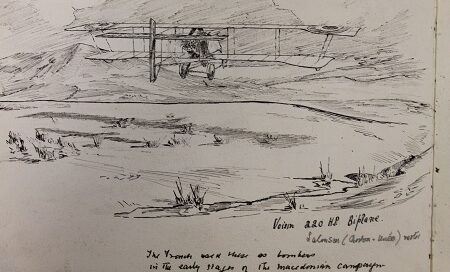
All the students really engaged with the letters, sketch books and diaries that we were able to produce as these were very personal and recognisable – although youngsters today text and email they appreciated reading the letters and diaries that soldiers and nurses had written. Also popular were the photograph albums and sketch books.
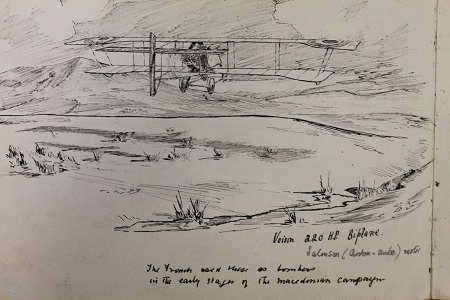
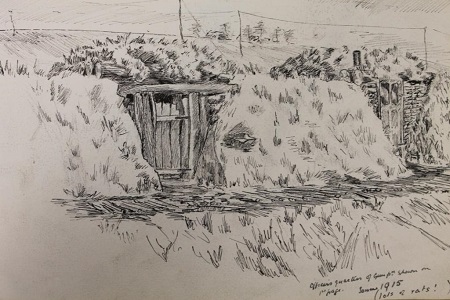
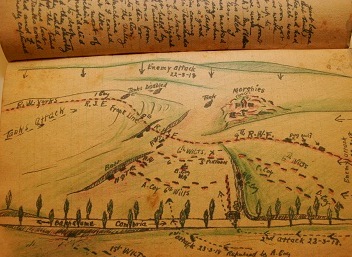
Having learnt about the history of the First World War, including the types of dance and fashions of the day, each group created their own response to what they had discovered. The Salisbury group – which included students from St Joseph’s, St Edmund’s and South Wilts Grammar schools – performed at the city’s Christmas Market in Guildhall Square with a dance that was based on the letters they had read at the History Centre.
All those who took part came together for a grand finale at County Hall, Trowbridge on 3rd March. The event, formally opened by council leader Jane Scott, included tea and cake, with the audience mingling with the dancers.

On a Voyage of Discovery…
Diaries and sketches and maps from the trenches; Tudor plots, pardons and royal machinations; Civil war sieges at old Wardour Castle – these are a few of my favourite things...
At least, these are just a few of the archives I have delved into since joining the History Centre team in May.
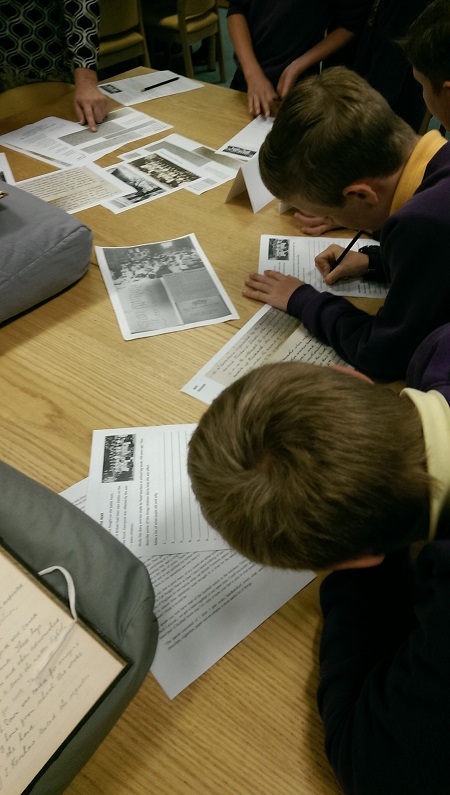
It is not merely self-indulgence that finds me exploring the strong rooms and miles of shelving housing historic documents – it is work. Really, it is. I am actually researching and preparing sessions for schools.
I am privileged to be the centre’s new Heritage Education Officer – taking over from Laurel Miller – which gives me access to all areas and the opportunity to work with the incredible team of archivists, local studies staff, archaeologists and conservators who occupy this building. (The collective knowledge of this team is phenomenal – and it’s all here on your doorstep, ready to be used.)
Working with primary sources and discovering the stories of people involved in our county’s history is exciting and my pleasant task is to share that excitement and enthusiasm with young people who visit the centre as part of a school group or community project. I also work with other heritage and arts educators around Wiltshire, promoting learning outside the classroom
Our education programme caters to all ages and as well as workshops held at the History Centre I also travel to schools and community groups to deliver outreach sessions.
The First World War Centenary is an area of particular personal interest and expertise, and I am delighted to be working with the county’s Wiltshire at War project which has launched two travelling exhibitions, with another three planned.
About Us
Research Tools
What We Do
Contact us
Wiltshire and Swindon History Centre
Cocklebury Road
Chippenham
SN15 3QN
E: cmas@wiltshire.gov.uk
T: 01249 705500
For all conservation enquiries including quotations and object deliveries, please book an appointment in advance.


