

Wiltshire Hauntings

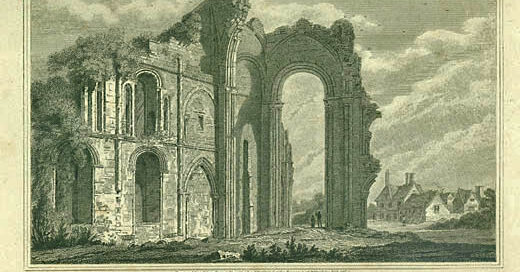
Wiltshire is home to many stories and tales of local hauntings, and many local history sections in libraries hold books on ghosts and folklore. Malmesbury is no exception. The abbey is possibly the first site that one would turn to for ghostly encounters, as it towers over the town as one of the few survivors of Henry VIII’s dissolution of monasteries due to its purchase by William Stumpe, who turned it into a parish church (Scanlan, 48). It is said that a former monk has been seen walking through the cemetery, and that monastic singing has been heard in the abbey itself.
Another famous haunted site in the town is the Kings Arms hotel and restaurant, where a deceased landlord seems to have never left his workplace.
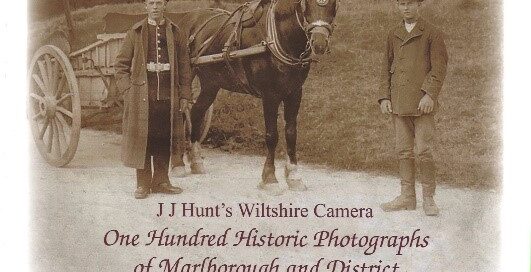
JJ Hunt’s Wiltshire Camera: One Hundred Historic Photographs of Marlborough and District
George M Barbour Cromwell House Publishing, 2021 ISBN 978-1-80049-797-9 £14.95 107 pages (unpaginated), hardback This collection of photographs represents the work of Wiltshire photographer JJ [...]
“Very disorderly, danced the Morris Dance”: Morris, Garlands, Sedition and Riot
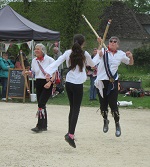
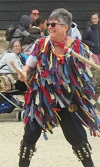
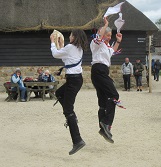
Devizes Jubilee Morris
Here at the History Centre, we’re no stranger to Morris Dancers. We’ve had dancers on the staff, while each May Bank Holiday Chippenham hosts its popular Folk Festival. It’s great fun watching the street theatrics, but there was once a darker side to Morris Dancing that led to the following stories being recorded by the Wiltshire Magistrates (and now appear in Records of Wiltshire).
What happened at Woodborough in May 1652 caused official concern, but how was it that Morris Dancing threatened the pillars of the state?
Capers against the Commonwealth
On the evening of Sunday, May 16th 1652, Edward Smyth and Edward Hawking left their homes in Woodborough and went to All Cannings, where they met and conspired with about a dozen people. That same Sunday, Robert Golfe went from Woodborough into Marlborough “to get a drummer”, while Thomas Beasant went to Ram Alley in Easton and “there invited and procured a fiddler”.
The following day, their plans were revealed when a crowd gathered from the surrounding countryside; according to the records, “three hundred persons, or thereabouts … gathered together in a Riotous, Routous, Warlike and very disorderly manner’.” If anyone thought about stopping them, they were armed “with muskets, pistols, bills, swords drawn and other unlawful weapons”.
The musicians led the crowd from Woodborough to Pewsey where they “very disorderly, danced the Morris Dance”, and committed other misdemeanours, including “drinking and tippling in the inn and Alehouse”. While the prevalence of weapons may, happily, be less, it’s reassuring to see that the drinking still continues in and around Morris circles to this day (and sometimes, people still disapprove).
Public nuisance, party, or Sedition?
In 1652, England was a republic, following the execution of Charles I. The Commonwealth kept a close eye on signs of dissent, looking for evidence of Royalist insurgency: traditional sports and pastimes were suspect. Ales, Morris and other customs had been the target of religious reformers since before the Civil War. The opposition from these authorities meant that Morris and other customs now symbolised the old order prior to the Civil War, when license and liberty were, supposedly, more freely allowed; as such, Morris dancing and the open drinking of ale was as much an open challenge to the authorities as the bearing of arms. Although the weapons offered a challenge to the authorities, the Morris spoke of tradition, culture, custom and a perceived stability before the upheavals of the 1640s. The new rulers of England were right to view the emotional power of such demonstrations with suspicion.

While the Morris at Pewsey may not be as famous as folksinger Pete Seeger, who was blacklisted by McCarthy in Cold War America, or Victor Jara, the Chilean musician executed during the 1973 coup, the Wiltshire boys used their folk art and their rootedness in the traditions of their place to show dissent toward the Authorities. Were the ringleaders seeking to incite rebellion, or just standing up for traditional fun? No doubt motives were mixed and shifting, including a mass of local and national grievances, as well as people being there for the fun, the beer and the free entertainment. What also seems remarkably modern was the casting of The Commonwealth as an alien, faceless Authority that stopped fun and meddled in the lives of “ordinary folk” (“Bonkers Conkers” anyone?).
However, as our next story shows, the dancers in Pewsey were evoking an idealised past in an “imagined village” …1
About Us
Research Tools
What We Do
Contact us
Wiltshire and Swindon History Centre
Cocklebury Road
Chippenham
SN15 3QN
E: cmas@wiltshire.gov.uk
T: 01249 705500
For all conservation enquiries including quotations and object deliveries, please book an appointment in advance.


